
Ecological storytelling
Most modern stories are hero stories, and their stories revolve around struggle, adversaries and one individual overcoming hardship. But throughout human history, there was a diversity of many other types of narratives, such as stories of collaboration, entanglement, relationships and ongoingness.
Scifi writer Ursula le Guin applied her carrier bag theory of fiction to write stories where nature is not a backdrop but a central character and going-on-ness the story arc rather than overcoming your enemies.
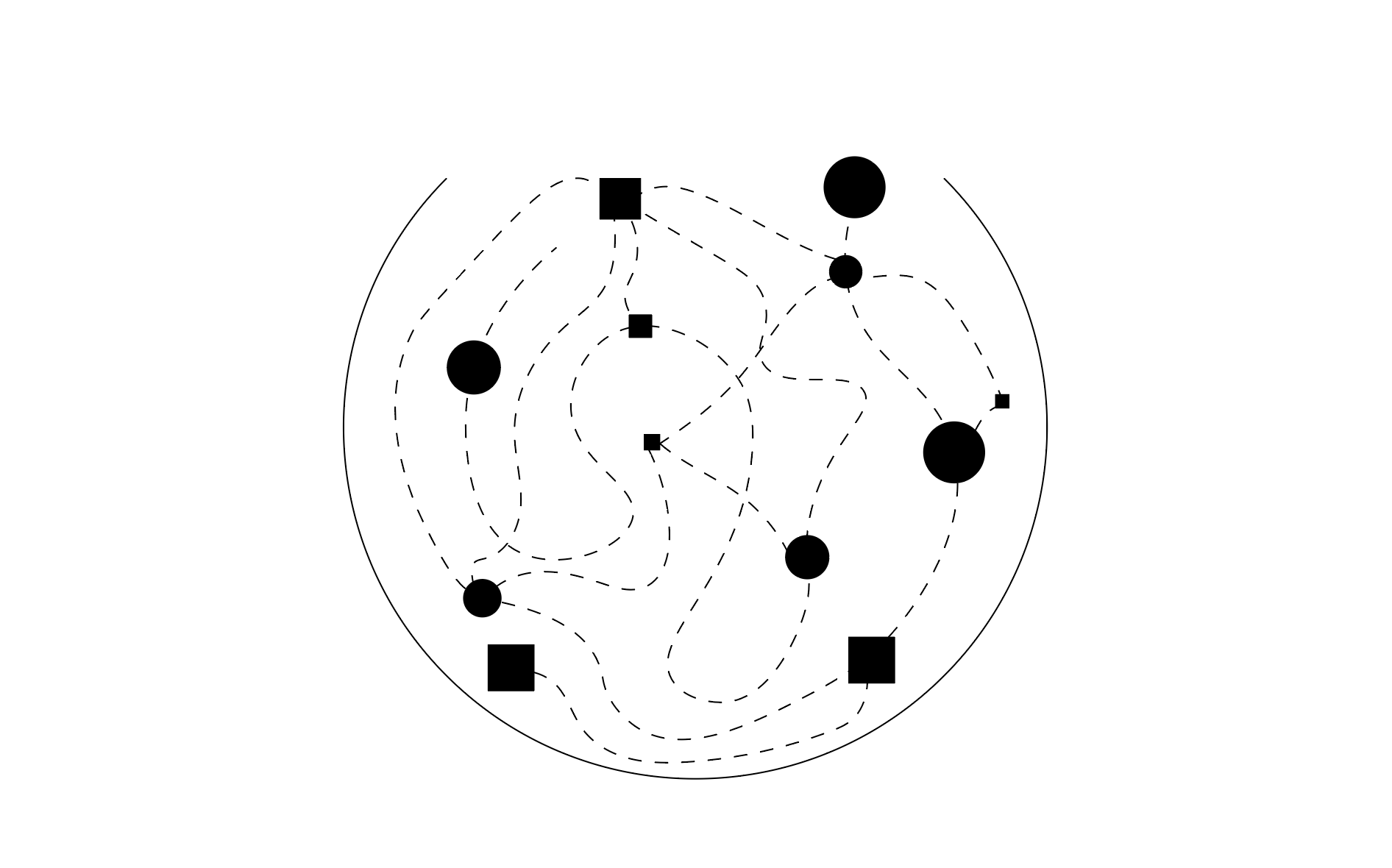
Stories are how individuals connect to collective memories and incorporate them into embodied and societal realities. In modern societies the storyscape has been colonized by the hero story: a monomyth of a single individual overcoming their enemies or adversities and being transformed by it. These stories reinforce the underlying values of modern society: individualism, survival of the fittest, hierarchal thinking and duality (we-them, good-bad, victor-loser).
Ursula K le Guin coined the carrier bag theory of fiction, based on Elizabeth Fisher’s carrier bag theory of human evolution to underly her science fiction narratives.
“I would go so far as to say that the natural, proper, fitting shape of the novel might be that of a sack, a bag. A book holds words. Words hold things. They bear meanings. A novel is a medicine bundle, holding things in a particular, powerful relation to one another and to us.”~ Ursula K Le Guin in The Carrier Bag Theory of Fiction.
Le Guin’s stories focus on the ordinary things, the relationships between different players take central stage over a single hero and nature takes an active part in the stories.