
Mycelial Care Networks
Rerooting Birth Ecologies into Community
What happens if we reroot birth in communities, rather than treat is as a singular event?
Our healthcare systems are tailored towards individuals and specific events, but neonatal and maternal health outcomes after birth are influenced by socio-economic background, family dynamics, intergenerational trauma and many other factors that are not currently addressed in the healthcare systems. This provotype applies biomimicry, emulating nature’s wisdom, to design a birth ecology rooted in community.
Fungi and community care
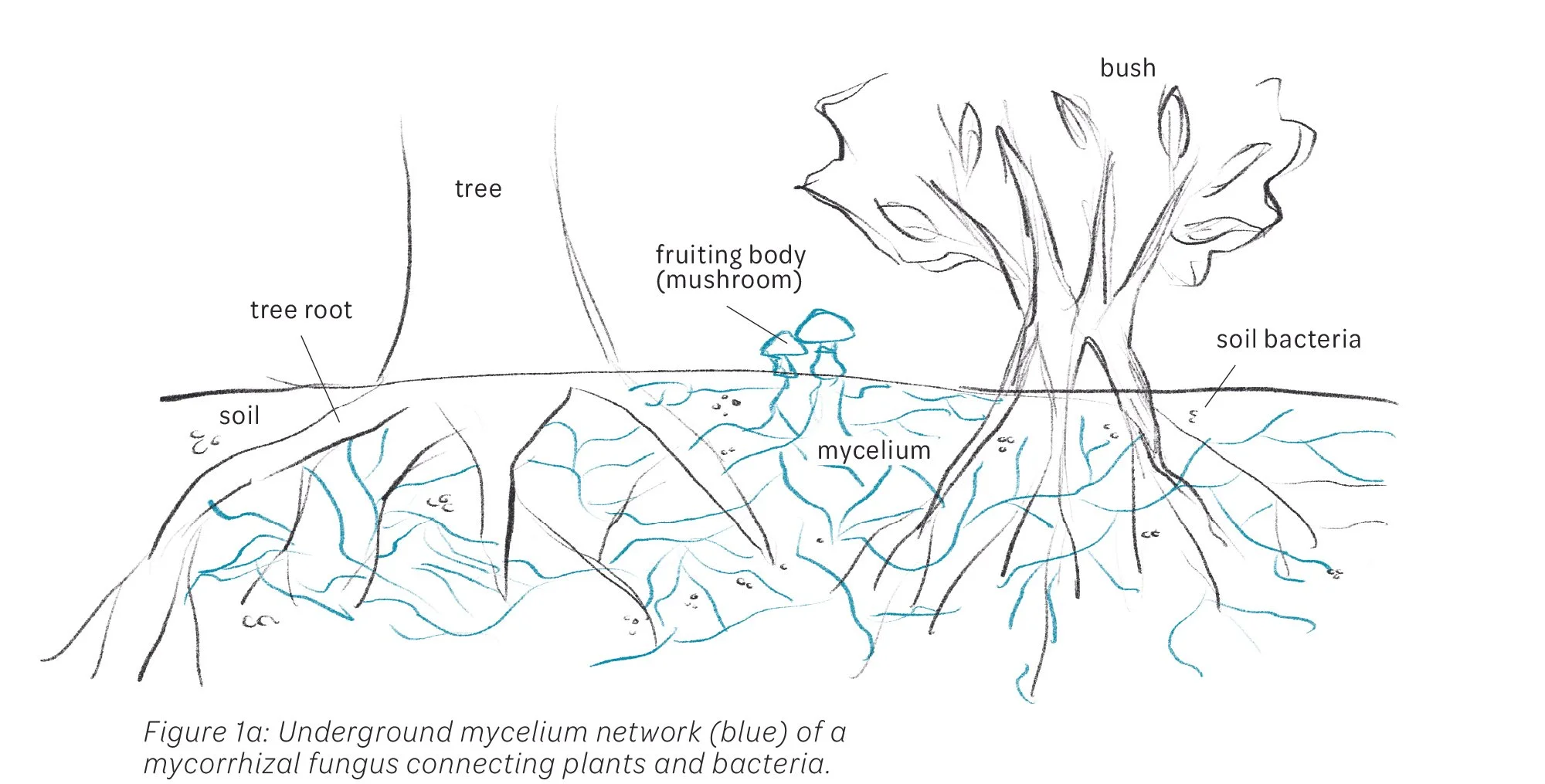
Most people know fungi from mushrooms in the forest. The main part of the fungus is actually underground: an entangled, thin, rootlike body stretching meters and even hectares underground, the mycelium.
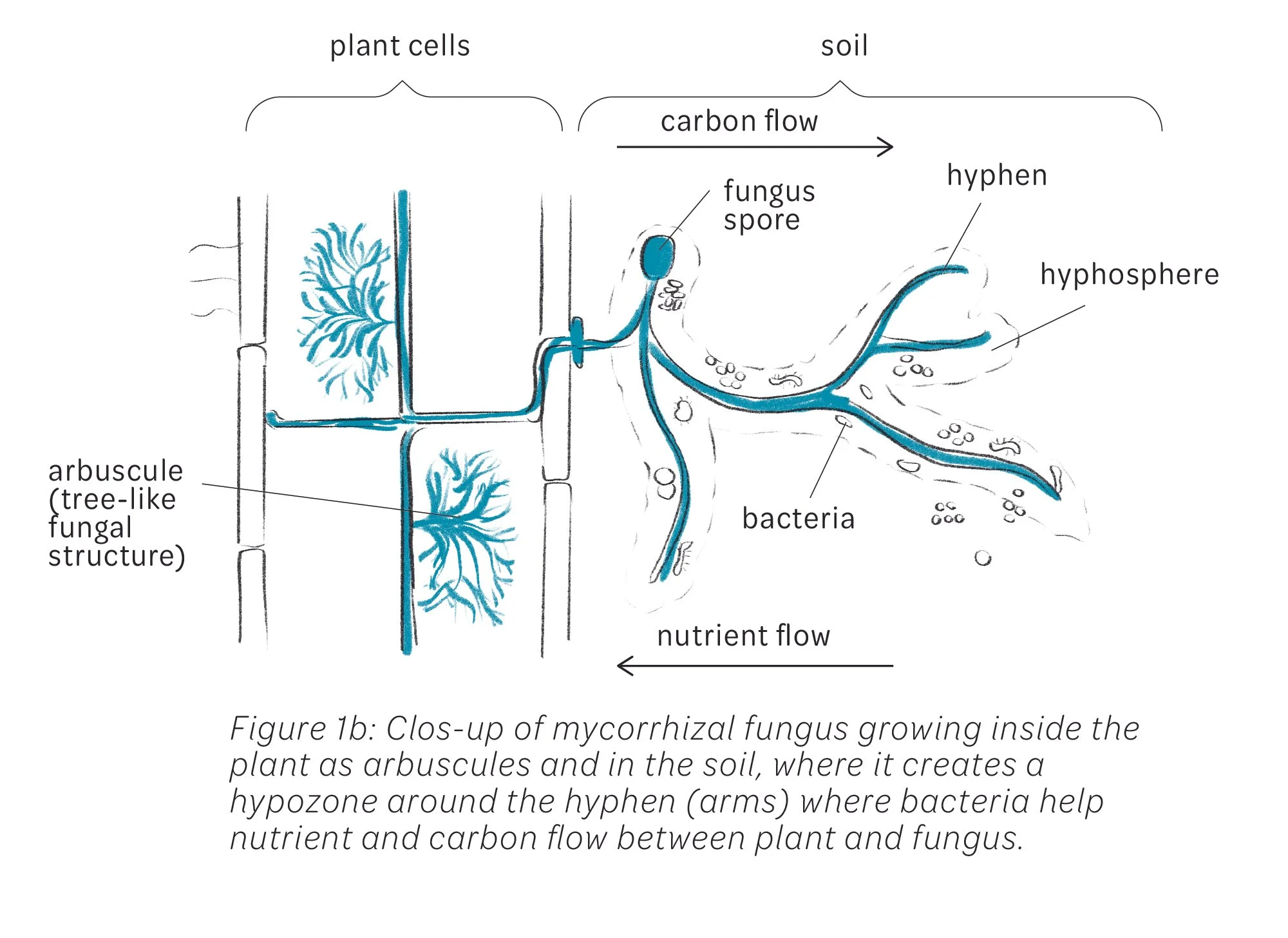
A special group of fungi played a decisive role in the evolution of life on earth: mycorrhizal fungi. Over 400 million years ago they started a close collaboration with plants and bacteria, a cross-Kingdom collaboration of species lightyears removed from eachother evolutionary. These fungi grew their filamentous bodies consisting of ‘hyphen’, the stretchy long parts, in and around plant roots and together with soil bacteria provide nutrients to plants, feed on plants’ carbon and keep the cycles of oxygen, carbon and nitrogen flowing across our planet. Collectively the hyphae are called the mycelium. Mycorhizzal fungi are a masterpiece of symbiotic collabration, resource distribution and community care and functions therefore as our mentor species in redesigning care ecologies surrounding birth.
Design strategies from mycorrhizal networks
Can we emulate the mycelium network to imagine a different ecosystem for birth care, that is inclusive, community-based and improves neonatal and maternal outcomes? Seven fungal design strategies and their implications for designing supportive and inclusive birth ecologies.
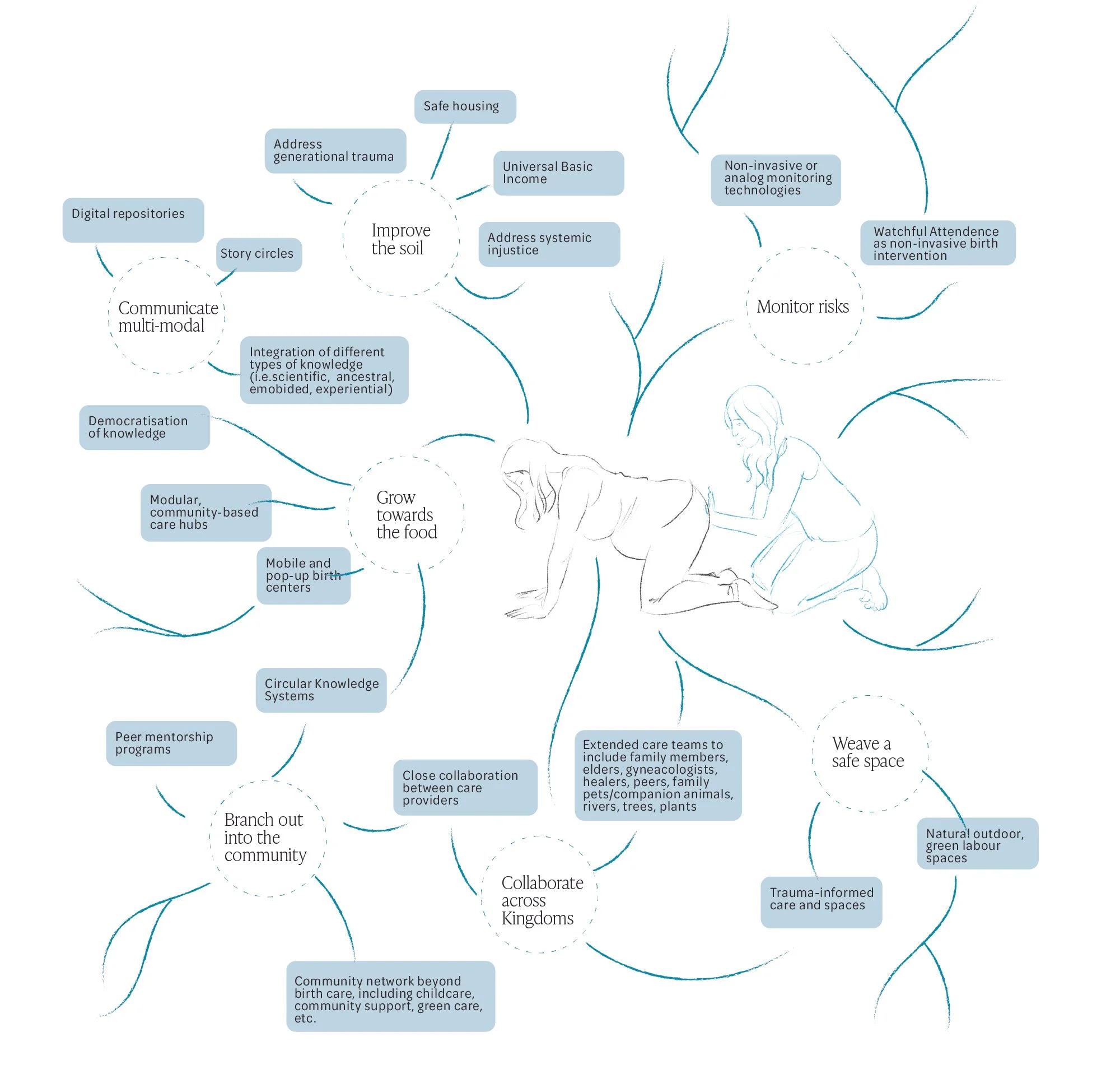
DESIGN STRATEGY 1: Grow towards the food
> Design community-rooted care ecologies that go where support is needed, rather than centralized institutions that require pregnant people to move out of their communities.
DESIGN STRATEGY 2: Branch out into the community
> Design care ecologies that not only expand into the community, but also feed back into themselves.
DESIGN STRATEGY 3: Collaborate across Kingdoms
> Design care ecologies that make interprofessional collaboration a priority, and include communities outside healthcare, such as extended family, neighbourhood, non-human companions, etc.
DESIGN STRATEGY 4: Weave a safe space
> Design safe spaces in care ecologies for exchange of knowledge, information and support, extending beyond birth care.
DESIGN STRATEGY 5: Monitor risks
> Design care ecologies that aptly monitor risks in a non-invasive way in order to take timely and appropriate measures to safeguard health of pregnant person and foetus..
DESIGN STRATEGY 6: Communicate multi-modal
> Design care ecologies that honour different types of communication and knowledge exchange.
Beyond human-centered care we take an ecological approach to birth, rejecting that birth only takes places as a singular event but rather part of the process of being part of a community, an ecosystem.
Prototyping the Mycelial Care Network
We reroot birth and birth care in community, intergenerational timelines, neighbourhood, more-than-human species, taking a holistic approach to redesign birth ecologies.
(click to enlarge)